NU-ACTIS Project Kickoff
February 4, 2026
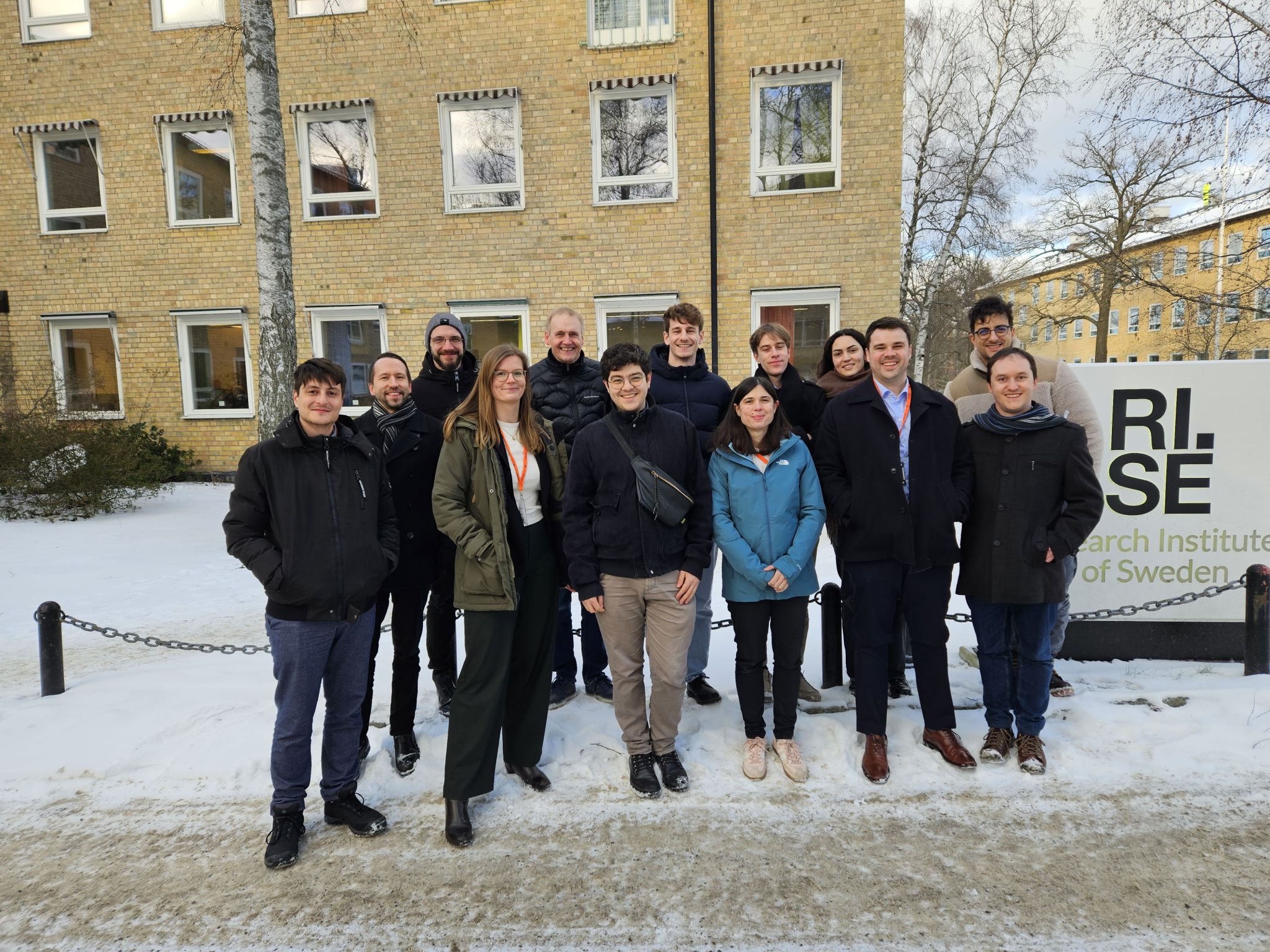
Last week, in snowy Stockholm, the NU-ACTIS project officially kicked off.
The project brings together a consortium of academic, industrial, and research partners to address one of the more pressing technical challenges emerging in modern power systems: the undesirable system dynamics that can arise from control interactions between inverter-based resources. As power electronics continue to spread across generation, transmission, distribution, and demand, these interaction-driven phenomena are becoming an increasingly important factor in the integration of renewables.
The kick-off meeting was an opportunity for the consortium members to get to know one another, exchange perspectives, and align on the first steps of the project. Just as importantly, it helped establish a common view of the main technical challenges to be addressed during the first year and the actions needed to tackle them.
A central theme of the project is inverter-driven instability, often discussed as IDI. As inverter penetration rises, the challenge is no longer only to connect more converter-based resources to the grid, but to understand how their controls interact across large and increasingly complex systems. That requires the right methods, the right models, and a careful treatment of uncertainty.
Over the first year, the project will focus on several core areas. One is the development and selection of appropriate tools and models to capture IDI phenomena in large power systems with high inverter penetration. Another is the definition and classification of the uncertainties that are relevant when assessing these dynamics. The project will also begin initial work on adaptive and machine learning based controllers aimed at addressing these challenges, while in parallel examining the current European regulatory landscape related to inverter-based resources and inverter-driven instability.
Taken together, these workstreams reflect the nature of the problem itself. This is not only a control problem, or only a modeling problem, or only a regulatory problem. It sits at the intersection of all three. Progress depends on being able to connect detailed technical understanding with practical methods for analysis and with a regulatory framework that can keep pace with the evolving system.
NU-ACTIS is supported and funded by CETPartnership and brings together a broad set of organizations across academia, research institutes, and industry. The consortium includes RISE Research Institutes of Sweden as coordinator, University College Dublin, Uppsala University, DTU Technical University of Denmark, Siemens Gamesa, eRoots Analytics, Hitachi Energy Sweden, and Aalto University.
For us at eRoots, it is exciting to be part of a project that is so closely aligned with the technical questions shaping the future of converter-dominated power systems. The integration of inverter-based resources is about understanding interactions, defining robust methods, and building the analytical and control frameworks needed for the next phase of the energy transition.
The project has just begun, but the first meeting already made one thing clear: the questions are ambitious, the need is real, and the work ahead is both technically deep and highly relevant.
If you would like to learn more about the project, feel free to get in touch.